Friday, 5 October 2012

04 October 2012 (Day 29):


Today was our IS presentation. All went well and we learnt a lot from each others’ presentations. From my presentation slides, I’d like to highlight some things that I think you may like to know about driving in China.

In Tianjin, the drivers have the “First is Right” thinking. This means that as long as the driver does anything first, he expects everyone else to yield to him. For example, picture yourself as a driver who is travelling on the 3rd lane on a 4-lane road when you notice that further up on your lane, there is a jam. At the same time, you notice a small opening on the 2nd lane beside you. Without a moment’s hesitation, you swerve into that opening and leave the other cars behind with no choice but to slow down (just as you expected them to). This may be a gross exaggeration but that’s the best example I have to help you understand the “First is Right” thinking.

As such, the drivers in Tianjin have a high level of awareness of the situation around them. By looking at the current situation, they are able to infer the “body language” of the cars around them and hence decide, as a driver, if he/she should slow down or continue at the current speed.
 

If they have a book on this,


Perhaps the publishers could consider a book like this too…

Just joking J

 
 The 2nd thing about the drivers is that no matter where you’re driving, whether on the road, on the road going in the opposite direction, on the pavement or bicycle lane, you MUST keep moving. For cars driving down the opposite direction, they must find a place to turn sooner or later and hence get back in the right flow of traffic.

 
To sum up what I have said, here are 2 simple rules to remember:
Rule #1: Don’t hit anything.
Rule #2: Don’t get hit by anything.
Simple as that J.

 
Now, I would like to share some interesting facts with you.

Interesting Fact #1
Since the first day we were in Tianjin, we heard several vehicles honking at each other in the morning, in the afternoon and even at night when we’re trying to sleep. According to my research, there are at least 10 different messages that honking can relay depending on the frequency and duration of each honk.
  • A solid honk (Hoooooonnnnkkk) is a call for attention.
  • Honking twice (Hoonnk Hoonnk) shows signs of irritation.
  • A series of short honks (Hnkhnk hnk hnk hnk) represents pure panic; and
  • An afterthought honk, which comes after a situation (like a minor traffic jam) clears up usually means that a rookie driver was a bit slow in hitting the honk button.
The drivers honk at both pedestrians and other car drivers and it can be pretty loud at times
  

Interesting Fact #2
In China, the drivers run through the red lights when there is, or isn’t, any opposing traffic. In 2009, a retired teacher in Lanzhou initiated a campaign to make an intersection near his home safer and threw bricks at cars that ran the lights. According to sources, he managed to hit over 30 cars before the police showed up. On a lighter note, he was praised on the Chinese Internet as a hero.
 
 
Well, I think that ends my blog entry for today. I hope that after reading this post you will become an expert honk-reader and also won’t er… hurl bricks at anyone who runs the lights, eh?
Until my next post, you readers take care!
 
Best regards,
Marianne
 
Author’s Note:
References
O     Traffic Laws in China. Retrieved September 2012 from InterNations website at http://www.internations.org/china-expats/guide/driving-in-china-15632/traffic-laws-in-china-2
O     05Transportation. Retrieved September 2012 from FACTS AND DETAILS website at http://factsanddetails.com/china.php?itemid=409&catid=13&subcatid=86
O     (18 April 2012). Driving in China. Retrieved September 2012 from Wikitravel website at http://wikitravel.org/en/Driving_in_China
O     About the dangers. Retrieved September 2012 from China Driver License website at http://www.china-driver-license.com/driving_in_china/the_dangers.html
O     Picture of Body Language bookcover retrieved from http://www.iwaha.com/ebook/blbook/index1.gif
O     Picture of man honking at pedestrian retrieved from http://graphics8.nytimes.com/images/2010/04/22/nyregion/complaint.480.jpg


03 October 2012 (Day 28):

The weather is getting colder and majority of us are starting to experience dry skin- Particularly on our hands, arms and faces.

As such, I would like to write down in this blog entry some of the things you SHOULD bring when you’re going to a place with dry weather, like during the autumn season in Tianjin.

 
Number 1: Lip Balm

This is such a handy, pocket-sized item and is easy to use. Just apply it on your lips and you will have no worries about painful, cracked and bleeding lips. For the guys, you may feel silly dabbing this on your lips but perhaps you could instead, rub a clean finger over the lip balm and dab your lips with that finger. Either way, it’s important to keep your lips protected.

 
There are SO many flavours to choose from!
That means there’s NO excuse for you to not buy 1 because you don’t like the flavour.


Lip balm in a jar. Just dab your finger in the lip balm gel and then on your lips


Number 2: Hydrating Gel/ Moisturizer

Until I came for this trip, I have never used such products because Singapore is always humid. But as of late, my hands have started feeling like crumpled parchment and it can be a bit scary if you experience it for the first time. So if you know that the country’s weather will be dry, please bring along your own hydrating gel/ moisturizer. Keep in mind that the face (cheeks in particular) can get dry as well and bring along a moisturizer for your face too if a brand sells separate products for face and body use.

My roommate uses this brand and it works quite well


Number 3: Lozenges

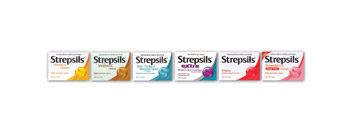
Like I’ve said before, the weather is dry and chances are you will experience a dry throat. There have been many occasions during this trip that I have contemplated about swallowing my lip balm so as to “moisturize” my throat. In Tianjin, I don’t know what lozenges are called so I can’t find nor buy them. Frankly speaking, I think it’s best to bring your own local lozenges from your home country for convenience’s sake.

I’d go with Strepsils as I’m used to them


Number 4: Water

Nothing to scorn about, water is vital in such weather. I find it pays to keep 2 bottles with you at all times. Heck, even if you don’t finish the 2nd bottle when you go out, you could always share it with a friend if they need it. In Tianjin, you have to drink bottled water so I recommend you to drink finish at least 1 bottle of water (which is about 550-600ml in volume) per day. It’s a good practice.

Drink up and keep hydrated!
 

Well, that’s all the recommendations I have when you go overseas to a country experiencing dry weather. I hope you stay hydrated wherever you are!

Take care and best regards,
Marianne
 

Author’s Note

References


Picture of Lip Balm in a jar retrieved from http://www.mapleleafpromotions.com/Custom_Lip_Gloss_Tin_Box.jpg

Picture of Nivea Aqua Sensation moisturizer retrieved from http://ba.fimgs.net/system/pics/5494/large/1_44022_07_2010_png.ashx?1302492899

Picture of Strepsils lozenges retrieved from http://www.shelflife.ie/img/Dec%2008/OTC2.jpg
02 October 2012 (Day 27):

If there’s one thing I really hate, then it’s being reminded of things I don’t want to be reminded of. Since I’m still in China, that one thing I hate to be reminded of is that I’m homesick. VERY homesick.
 

We started today just fine- had our Aircraft Propulsion Systems lesson in the morning and were free to do our IS (Interdisciplinary Studies) project in the afternoon. Since my group’s focus was on transportation, we had to get a feel of the Subway service in Tianjin.

We went into a station called HongQi’NanLu Zhan and I can tell you that the entire interior was white and pristine. After we bought our coin-shaped tickets at the machine, we could tap it at the gate and enter the waiting area.

The HongQi’NanLu Zhan Station
 

Bai Ming purchasing tickets from the Automatic Ticket Machine (on left); Coin shaped tickets, each one meant for a single trip


That was when I had that sickening lurch in my stomach. The waiting area looked exactly like Singapore’s underground MRT (Mass Rapid Transport) stations, except that it was all white. Even the trains looked similar. The only differences I observed was that inside the waiting areas, there were dustbins and toilets, which were located at the furthest end of the room.


The interior of HongQi’NanLu Zhan Station
  

Interior of train
 
 
Tianjin Metro System Map found in the Subway Train, with our travel route marked out on it
 

Since we wanted to get to ChangHongGongYuan, we had to travel eastwards to YingKouDao Interchange (marked by a yellow dot), go Northwards to XinNanJiao Interchange (marked by a purple dot) and go westwards to our final destination (marked by a red dot).

Along the way, we noticed some more similarities of Tianjin’s Subway system to Singapore’s MRT system. Firstly, the trains at the Interchange were packed with people and there were safety fences that were installed on the platforms so as to prevent people from falling on to the tracks.

Once we reached our destination, we were rather disappointed that at the ChangHongGongYuan (translated as Long Rainbow Park) station, there were no parks or rainbows in sight. As such, we soon headed back into the station and planned our route back to the hotel.

Our initial plan was to take the train straight from ChangHongGongYuan Station to the TianJin Zhan (marked by a blue dot). However, when we reached DongNanJiao (marked by a pink dot), the train stopped and told us that it had reached the end of the line. Many passengers were surprised. Some got out but others stayed in their seats as the train driver drove back the way we came.
 
Intended Route to Tianjin Zhan marked in yellow
 
 
Actual Route we took marked in blue- We made a U-turn back to XiNanJiaoInterchange (Purple dot) so that we could take a train to YingKouDao (Yellow Dot). Observe the grayed-out line between the pink and blue dots. This representation can be found on the maps placed in the Subway train.
 

According to my classmate, the reason why the station between ChangHongGongYuan and Tianjin Zhan was closed was because a flood had occurred during the construction of the tunnel and buried one of the tunnel boring machines. And since it was too expensive to retrieve the machine, the people in charge of the project blocked off the area.

I think that perhaps the Subway service should change the posters that they put up around the station as those maps shows all the stations (even the  station between ChangHongGongYuan and Tianjin Zhan) as complete. Only the posters in the Subway train give a more accurate picture of the routes available.


According to this poster outside HongQi’NanLu Zhan, all stations are ready for use. However, if you compare it with the Tianjin System Metro Map found in the Subway train, this poster is not accurate.
 
 Once we reached Tianjin Zhan, we split ways so that we could experience what it was like to travel by bus or by taxi. I think it took us about 20 minutes or so to get back to the hotel by taxi.

While today had been interesting, I certainly didn’t enjoy those painful moments of looking at the stations and being reminded of (and wishing that I was back in) Singapore.

Well, I had better stop now before more memories of my beloved homeland flood back to me.

Good night, dear reader, and take care!


Best regards,
Marianne

01 October 2012 (Day 26):

From today until 7 October, it is China’s National Day Holidays. As such, there are no students going for lessons. The good news is that we can return back to the classroom in the College of International Education (which is not as cold or draughty as the other classroom we went to) and continue our Aircraft Propulsion Systems (APS) lessons there.
After our APS lesson, my classmates and I went over to the relatively unoccupied canteen and had a good lunch. Normally when there are students around, we see them eat and engage in friendly gossip. Some laugh, some snigger and some sign.

No, I don’t mean signing papers, that kind of “sign”. Signing as in, using their hands to communicate with each other. This is normally practiced by the hearing impaired and you’d be surprised at how fast some of them can sign- I’m in the Hi! Club (That’s short for Hearing Impaired Club) in Ngee Ann Polytechnic, so trust me when I say they’re fast.

Although my signing skills are mediocre, I can recognize simple signs for “yes” and “no”, stuff like that. However, when I observe the hearing impaired students here in Tianjin sign, I have absolutely no idea what they are “talking” about.

The reason is obvious- They use a different set of signing. In Singapore, we use our own local signing for certain things and we follow the grammar structure of spoken English. The Tianjin students however, are Chinese, and hence follow the style of spoken Chinese with their own set of signage.

I have done some research on Chinese sign language and was shocked by what I found.

Before I continue, I’d just like to give a brief explanation- For signing in English, if you don’t know what the sign is for a certain word, you simply spell it out. For example, you don’t know (or can’t remember) how to sign “cat” so you simply spell with your right hand “C-A-T”.

In Chinese, however, several words can have the same Pinyin (which enables you to pronounce the word) but different tones (4, to be specific) with which to speak with. If you pronounce wrongly, you could end up saying the wrong thing.

The American finger-spelling system we in Hi! Club use


Now this is where I am flabbergasted, the Chinese sign language has a finger spelling system for certain strokes AND also for the pinyin. I’m guessing that with these 2 systems- the Chinese can choose to either “write” or spell out the word.

If the person chooses to spell out the pinyin, he/she must then indicate the specific tone (1 out of 4 tones) by blinking his/her eyes or by a light head movement. From all the hearing impaired students that I have observed, I have yet to see one blink or tilt the head while signing. Perhaps their signing vocabulary is so fluent that they have no need to worry about spelling it out- Lucky them. Regrettably, I have had no opportunity to ask them what certain signs represent but it is rather encouraging to see that the hearing-impaired students are not hampered and are enjoying themselves in the university.
 

The charts showing the fingerspelling of the strokes, Zhuyin, (on the left) and Pinyin spelling


In addition, for this blog entry, I have surfed YouTube for videos on sign language and have found some to be very inspirational. I think that for those of us who can hear, we should appreciate what we have.

Although I never really thought much about it until I came for this OIP trip, I think that the Hi! Club is a good place to make friends with others and open our eyes to the bigger world. We all may have things that we can or cannot do but we’re all human- and that’s what that is common in every single one of us.

Thanks for reading!

 
Best regards,
Marianne
 

Author’s Note:

References


John. Chinese Sign Language: Fingerspelling. Retrieved on 01 October 2012 from sinosplice website at http://www.sinosplice.com/life/archives/2007/04/02/chinese-sign-language-fingerspelling
 
(01 Jan 2009). The Chinese Sign Language Culture. Retrieved on 01 October 2012 from Mysterious China Blog at http://www.mysteriouschina.com/the-chinese-sign-language-culture/

30 September 2012 (Day 25):

When I go for camps, I normally throw all my dirty clothes into a bag. And when I go home at the end of the camp, I will dump these clothes into the washing machine and all my problems will be over.

However, this Overseas Immersion Programme is not a camp, and it’s definitely much longer than a normal 3 day-2 night stay. And if you bring only 7 sets of clothing (because that’s only so much that your suitcase can fit), then washing your clothes regularly is a must.

In the hotel I am currently staying at, there are 2 washing machines available and each is located in 1 hotel room that belongs to my classmates. Normally, I can choose to use either washing machine. All I have to do is turn on the machine, throw my clothes in, add the washing detergent powder and let the machine take care of the rest. 50 minutes later, I can take my clean clothes back to my room and hang them out to dry.

Functioning Washing Machine + Washing Detergent + Dirty Clothes
= Clean Clothes + Life Easier for me J
 

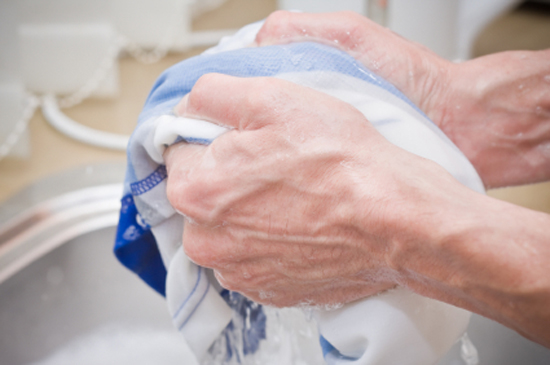
My roommate, however, does not share the same thinking as me. She prefers to hand-wash her clothes and tells me that it is much quicker than using the washing machine. Once, I did try to wash my clothes by hand but I, alas, am very lazy. To sit there and scrub clothes is not my idea of being productive.  In my opinion, the washing machine is there for you to use and make your life easier- Hence, you SHOULD use it.
 

Basins + Dirty Clothes + Washing Detergent + Water = Wet Clothes + Wet me
= Not Cool for me L

 
However, we all have different ways of doing things so I can’t say my classmates are wrong or silly for scrubbing their clothes by hand nor can they say that I am lazy (I’m just trying to multi-task my work and domestic affairs at the same time).

Ah well, washing machines or manual scrubbing, as long as the clothes will dry and be clean and ready for use, I have no qualms over which method is better (although I will side the washing machines in terms of making life easier).

Goodbye for now, dear reader, thanks for reading!

 
Best regards,
Marianne
 
P.S. Today is the Mid-Autumn Festival but I have not seen any fireworks. Perhaps it is celebrated in a specific area in Tianjin that I am unsure of. I apologise if I have given you any false hope about it in my Day 18 blog entry. But still, I wish my readers and their family members to have a Happy Mid-Autumn Festival Celebration!
 

Author’s Note

References


2nd picture of hands squeezing wet clothes retrieved from http://wardrobeadvice.com/wp-content/uploads/2010/02/Hand-wash.jpg

29 September 2012 (Day 24):

Whenever my friends and I go over to the supermarket Vanguard, I can’t help but compare it with our own Singapore supermarkets. That is why, for today’s blog entry, I will write down my observations of Vanguard and compare it with Giant, a supermarket that is located near my home back in Singapore.


Vanguard Supermarket

 
In comparison with Giant, Vanguard is HUGE. It spans over 2 floors and has a staggering amount of goods on sale. From food, champagne and a bakery on the 1st floor, the 2nd floor sells clothing, personal hygiene goods, children’s toys, televisions and even cameras. Although Giant too, sells these items (except for the cameras), their range is not as big as those found in Vanguard. Also, the Giant in my neighbourhood covers only 1 floor.

It’s a bit hard for me to compare prices as not many of the brands found in Giant can be found here in Vanguard.
As to purchasing in Vanguard, customers are required to bring their own bags to carry their groceries in as the cashiers will not bother to pack the items for you. If you want a plastic bag, you will have to pay 0.3 RMB per bag. At this rate, I find it much more worth it to purchase a recyclable bag- It is more durable and I am able to stuff almost all of my groceries in. Although it is rather troublesome to grab all the items after you have paid for them, I find this a good way to “go green”.

The next thing I find so simple yet ingenious is the installation of short pillars, or posts, at the entrance (cum exit) to the supermarket. This prevents people from pushing the trolleys out of the supermarket since the carts are too big to squeeze through the posts. True that there is a big mess of trolleys scattered all over the carpark (which is located between the entrance and Vanguard) and near the entrance (cum exit), but at least Vanguard need not worry about lost trolleys becoming “works of art” around the housing estates, as it happens with Giant’s pushcarts.


The posts installed at the entrance (cum exit) at Vanguard


Perhaps both Giant and Vanguard can learn from each other. Giant could put up posts surrounding the entrances and exits to their supermarket thereby preventing people from taking the trolleys back home. Although Giant encourages the green initiative by reducing the number of plastic bags used, it will take quite some time before it will manage to follow Vanguard’s concept because Singaporeans tend to use these plastic bags for their dustbins and will complain to the cashier if no plastic bags are given.

Vanguard, on the other hand, could have an area where all the trolleys must be kept instead of being scattered all over the place and making it hard for vehicles to navigate through the carpark.

Hopefully, in time, we may see some improvements in Giant’s “missing pushcarts” situation.

Thanks for reading!
 

Best regards,
Marianne

28 September 2012 (Day 23):


For my readers’ information, my Chinese name is Ye Xinyi, 叶心怡. Translated, it literally means “Leaf Heart Happy”.

During this trip, many people have told me that it is a very nice name. I never really thought about how nice it was until today, where I saw it as a really pretty name for the first time. Why do I say that? Well, let’s just say it had something to do with today’s IS (Interdisciplinary Studies) lesson.

The lesson was on Chinese Knots and Artistic Design of Chinese Characters, and was conducted by the same Professor who taught us how to do paper cutting (on Day 13).

For the 1st hour of the lesson or so, he taught us how to do a simple traditional knot. When completed the loop of the knot can be worn on the wrist or around the neck, depending on how large you adjusted the loop to be.
 
Tie 2 dead knots like this…


Pull the inner loop of each knot through the area where the string of the opposite knot overlaps (See diagram below) 


 Pull hard and you’re done!


After observing the knot, I think that by repeating the knot a second time and tying a few dead knots can form a dragonfly. I have yet to experiment with this theory but I’m sure that it is possible because I have a keychain back home that uses similar knots to this.
 

If I shorten the loop at the top, push the 2 knots closer together and add a few dead knots at the loose ends, I’m sure it’ll look like a dragonfly.


Due to time constraints, the Professor was unable to teach us anymore knots and proceeded to show us how he designed Chinese characters. However, before he could start, he required 3 students’ names. Among us students who had eagerly raised our hands to be a part of this activity, Mr Wong (our Aicraft Propulsion Systems lecturer) chose Vannessa, Yi Heng and me.

We wrote our names on the blackboard and promptly went back to our seats. Admittingly, my name looks the simplest to write and I did wonder how he was going to do mine.


Clockwise from top: My name, Yi Heng’s name and Vannessa’s name
 
The Professor chose my name first and began painting with on 1 of the 3 scrolls that he had stuck on the blackboard. With deliberate and careful strokes, he painted out ye (叶) first and took a fine tipped brush to draw in the finer details, such as the butterfly’s antennae. He proceeded with the same steps for the next 2 characters in my name.
Once mine was completed, he painted out Vannessa’s name as well as Yi Heng’s. Among our 3 names, I was the only one to have a goldfish painted within my name. As such, I feel quite proud of my name. For the 1st time, my Chinese name looks so nice and colourful. And the birds, butterfly and goldfish on it are so sweet.
 
Our completed names
(From the top: My name, Vannessa's name and Yi Heng's name)
 
The last activity the Professor did was to paint a scroll for Ngee Ann Polytechnic, as a gift from Tianjin University of Technology. Mr Wong accepted the painting from the Professor and a lot of us took photos of all the paintings.
 
Mr Wong and the Professor posing with the completed scroll for Ngee Ann Polytechnic
 
It takes skill to write Chinese characters out in calligraphy. But it takes an extra flair of creativity to make Chinese characters look fancy (yet legible) at the same time. Perhaps one day… if I do master in the art of using the Calligraphy brush, I will artistically write all Chinese characters just as the Professor did. But if I don’t master the Calligraphy brush, then I’ll settle with acrylic paint and normal brushes instead.
Take care, dear reader, and thanks for reading!
 
Best regards,
Marianne