Friday, 12 October 2012

06 October 2012 (Day 31):


Although we will be leaving in 5 days’ time, we still need to buy bottled water to quench our thirst. A classmate of mine bought half a dozen 2-litre bottles to bring back to the hotel. I, on the other hand, am not so strong so I bought only 1.


Wish I could carry so much…


As I lug my heavy bottle back to my hotel room and set it on the table where at least three 550ml bottles are waiting patiently in a row to be refilled, I start to wonder- why do we even need to buy bottled water in the first place?

After doing a quick bit of research, I found out that the main water source (the rivers) in China are badly polluted with sewage and other contaminants such as chlorine, lead, mercury, nitrates, bacteria and microorganisms.

In a bid to disinfect the water, the Chinese departments of water works add more chlorine to the water. However, when ingested, inhaled or absorbed by the skin (through bathing), chlorine can cause a “significant increase in certain types of cancer, asthma and skin irritations.” *

There are several other dangers that the other contaminants can cause. Appended below is a quick summary of the contaminants and their harmful effects.


·         Lead
-           Poisonous to humans, even in micrograms
-          Lead poisoning can result in increased blood pressure, colon cancer, kidney dysfunction and anemia in adults
-          In children, it can cause permanent damage to the nervous system, hinder cognitive and physical development and even trigger violent behaviour


·         Nitrates
-          Interferes with the blood’s ability to carry oxygen, this leads to a lack of oxygen (hypoxia)
-          It can affect breathing patterns and in the long term, cause muscle soreness


·         Bacteria and microorganisms
-          Can cause diarrhea, vomiting and cramps
-          Lethal to those who have a weak immune system


And if you think it’s safe to drink from bottled water, there has been a case where a Taiwanese multinational brand was discovered to have used ordinary tap water for its bottled mineral water. However, I should think that if you buy bottled water from reputable brands, you should be quite safe.

In my opinion, for those of us who have potable tap water, we should be thankful for that. And even if we’re drinking tap water or bottled water, let’s all just be grateful that at least, we still have water to keep us going.


Cheers to water!


Thanks for reading!


Best regards,
Marianne


Be sure to stay hydrated!

________________________________________________________________________
Author’s note:

References


(2012). WATER QUALITY. Retrieved on 06 October 2012 from PureLiving-Indoor Environmental Solutions at http://www.purelivingchina.com/learning-center/water-quality/

What Happens if Cells do not get enough oxygen. Retrieved on 06 October 2012 from answers.com at http://wiki.answers.com/Q/What_Happens_if_cells_do_not_get_enough_oxygen

Picture of man carrying bottled water retrieved from http://comps.canstockphoto.com/can-stock-photo_csp10068929.jpg


Friday, 5 October 2012

05 October 2012 (Day 30):

Every morning before we go for our Aircraft Propulsion Systems (APS) lessons, many of my classmates eat this for breakfast. Many times I wanted to buy but was afraid to try due to hygiene issues.

Lately, however, my friends found a stall inside the university selling the very item I wanted to try. And so, today I deliberately ate a small breakfast so that I would have a good reason to buy and eat the Jian Bing Guo Zi.

This is effectively an egg pancake with sauce and a soft dough stick (called You tiao), or a crispy crust of rice, rolled up in it. This meal is prepared on the spot and normally eaten for breakfast. In addition, the Jian Bing Guo Zi is unique to Tianjin but it’s just as popular in Beijing as well.

 
A vendor making Jian Bing Guo Zi
 
 
The one I had for breakfast today cost 5RMB and had you tiao inside. It was rather hot at first, since it just came out fresh from the grill. But once it cooled down, I could tuck in without any worries. To be frank, it tasted REAL good. The you tiao gave the meal a nice salty, yet chewy texture. I haven’t tried the Jian Bing Guo Zi with crispy rice filling yet but my friends say it tastes nice too. So until I try it for myself, you just have to take their word for it.


Before I end this blog, I want to sabo (That’s Singlish for sabotage) you readers. I want to whet your appetite with the following pictures of Jian Bing Guo Zi. Scroll down if you dare!
 
 
Looks good, doesn’t it?


Alright, I’d better stop teasing all of you now. Take care, dear readers.  I hope you have a good day today!
 
Best regards,
Marianne
 
Author’s Note:
References
Picture of man making Jian Bing Guo Zi retrieved from http://www.topbeijingtravel.com/pic/city/beijing/eating/Thin-Pancake-4.jpg
Picture of 3 Jian Bing Guo Zi in a row retrieved from http://www.topbeijingtravel.com/pic/city/beijing/eating/Thin-Pancake-1.jpg
 
 Duan Xuelian. (25 Sept 2009). Jian Bing Guo Zi. Retrieved on 05 October 2012 from CRIENGLISH.com athttp://english.cri.cn/6566/2009/09/25/902s518543.htm
Imogen Rogerson-Costello. Hungry in the Streets of Tianjin – Traditional Food and Snacks. Retrieved on 05 October 2012 from eChinacities.com at http://www.echinacities.com/tianjin/city-life/hungry-in-the-streets-of-tianjin-traditional-food-and.html
 
(2011). Thin Pancake (Jian Bing Guo Zi). Retrieved on 05 October 2012 from Top Beijing Travel website at http://www.topbeijingtravel.com/beijing-food-restaurant/beijing-thin-pancake.htm


04 October 2012 (Day 29):


Today was our IS presentation. All went well and we learnt a lot from each others’ presentations. From my presentation slides, I’d like to highlight some things that I think you may like to know about driving in China.

In Tianjin, the drivers have the “First is Right” thinking. This means that as long as the driver does anything first, he expects everyone else to yield to him. For example, picture yourself as a driver who is travelling on the 3rd lane on a 4-lane road when you notice that further up on your lane, there is a jam. At the same time, you notice a small opening on the 2nd lane beside you. Without a moment’s hesitation, you swerve into that opening and leave the other cars behind with no choice but to slow down (just as you expected them to). This may be a gross exaggeration but that’s the best example I have to help you understand the “First is Right” thinking.

As such, the drivers in Tianjin have a high level of awareness of the situation around them. By looking at the current situation, they are able to infer the “body language” of the cars around them and hence decide, as a driver, if he/she should slow down or continue at the current speed.
 

If they have a book on this,


Perhaps the publishers could consider a book like this too…

Just joking J

 
 The 2nd thing about the drivers is that no matter where you’re driving, whether on the road, on the road going in the opposite direction, on the pavement or bicycle lane, you MUST keep moving. For cars driving down the opposite direction, they must find a place to turn sooner or later and hence get back in the right flow of traffic.

 
To sum up what I have said, here are 2 simple rules to remember:
Rule #1: Don’t hit anything.
Rule #2: Don’t get hit by anything.
Simple as that J.

 
Now, I would like to share some interesting facts with you.

Interesting Fact #1
Since the first day we were in Tianjin, we heard several vehicles honking at each other in the morning, in the afternoon and even at night when we’re trying to sleep. According to my research, there are at least 10 different messages that honking can relay depending on the frequency and duration of each honk.
  • A solid honk (Hoooooonnnnkkk) is a call for attention.
  • Honking twice (Hoonnk Hoonnk) shows signs of irritation.
  • A series of short honks (Hnkhnk hnk hnk hnk) represents pure panic; and
  • An afterthought honk, which comes after a situation (like a minor traffic jam) clears up usually means that a rookie driver was a bit slow in hitting the honk button.
The drivers honk at both pedestrians and other car drivers and it can be pretty loud at times
  

Interesting Fact #2
In China, the drivers run through the red lights when there is, or isn’t, any opposing traffic. In 2009, a retired teacher in Lanzhou initiated a campaign to make an intersection near his home safer and threw bricks at cars that ran the lights. According to sources, he managed to hit over 30 cars before the police showed up. On a lighter note, he was praised on the Chinese Internet as a hero.
 
 
Well, I think that ends my blog entry for today. I hope that after reading this post you will become an expert honk-reader and also won’t er… hurl bricks at anyone who runs the lights, eh?
Until my next post, you readers take care!
 
Best regards,
Marianne
 
Author’s Note:
References
O     Traffic Laws in China. Retrieved September 2012 from InterNations website at http://www.internations.org/china-expats/guide/driving-in-china-15632/traffic-laws-in-china-2
O     05Transportation. Retrieved September 2012 from FACTS AND DETAILS website at http://factsanddetails.com/china.php?itemid=409&catid=13&subcatid=86
O     (18 April 2012). Driving in China. Retrieved September 2012 from Wikitravel website at http://wikitravel.org/en/Driving_in_China
O     About the dangers. Retrieved September 2012 from China Driver License website at http://www.china-driver-license.com/driving_in_china/the_dangers.html
O     Picture of Body Language bookcover retrieved from http://www.iwaha.com/ebook/blbook/index1.gif
O     Picture of man honking at pedestrian retrieved from http://graphics8.nytimes.com/images/2010/04/22/nyregion/complaint.480.jpg


03 October 2012 (Day 28):

The weather is getting colder and majority of us are starting to experience dry skin- Particularly on our hands, arms and faces.

As such, I would like to write down in this blog entry some of the things you SHOULD bring when you’re going to a place with dry weather, like during the autumn season in Tianjin.

 
Number 1: Lip Balm

This is such a handy, pocket-sized item and is easy to use. Just apply it on your lips and you will have no worries about painful, cracked and bleeding lips. For the guys, you may feel silly dabbing this on your lips but perhaps you could instead, rub a clean finger over the lip balm and dab your lips with that finger. Either way, it’s important to keep your lips protected.

 
There are SO many flavours to choose from!
That means there’s NO excuse for you to not buy 1 because you don’t like the flavour.


Lip balm in a jar. Just dab your finger in the lip balm gel and then on your lips


Number 2: Hydrating Gel/ Moisturizer

Until I came for this trip, I have never used such products because Singapore is always humid. But as of late, my hands have started feeling like crumpled parchment and it can be a bit scary if you experience it for the first time. So if you know that the country’s weather will be dry, please bring along your own hydrating gel/ moisturizer. Keep in mind that the face (cheeks in particular) can get dry as well and bring along a moisturizer for your face too if a brand sells separate products for face and body use.

My roommate uses this brand and it works quite well


Number 3: Lozenges

Like I’ve said before, the weather is dry and chances are you will experience a dry throat. There have been many occasions during this trip that I have contemplated about swallowing my lip balm so as to “moisturize” my throat. In Tianjin, I don’t know what lozenges are called so I can’t find nor buy them. Frankly speaking, I think it’s best to bring your own local lozenges from your home country for convenience’s sake.

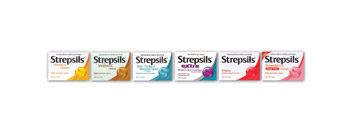
I’d go with Strepsils as I’m used to them


Number 4: Water

Nothing to scorn about, water is vital in such weather. I find it pays to keep 2 bottles with you at all times. Heck, even if you don’t finish the 2nd bottle when you go out, you could always share it with a friend if they need it. In Tianjin, you have to drink bottled water so I recommend you to drink finish at least 1 bottle of water (which is about 550-600ml in volume) per day. It’s a good practice.

Drink up and keep hydrated!
 

Well, that’s all the recommendations I have when you go overseas to a country experiencing dry weather. I hope you stay hydrated wherever you are!

Take care and best regards,
Marianne
 

Author’s Note

References


Picture of Lip Balm in a jar retrieved from http://www.mapleleafpromotions.com/Custom_Lip_Gloss_Tin_Box.jpg

Picture of Nivea Aqua Sensation moisturizer retrieved from http://ba.fimgs.net/system/pics/5494/large/1_44022_07_2010_png.ashx?1302492899

Picture of Strepsils lozenges retrieved from http://www.shelflife.ie/img/Dec%2008/OTC2.jpg

02 October 2012 (Day 27):

If there’s one thing I really hate, then it’s being reminded of things I don’t want to be reminded of. Since I’m still in China, that one thing I hate to be reminded of is that I’m homesick. VERY homesick.
 

We started today just fine- had our Aircraft Propulsion Systems lesson in the morning and were free to do our IS (Interdisciplinary Studies) project in the afternoon. Since my group’s focus was on transportation, we had to get a feel of the Subway service in Tianjin.

We went into a station called HongQi’NanLu Zhan and I can tell you that the entire interior was white and pristine. After we bought our coin-shaped tickets at the machine, we could tap it at the gate and enter the waiting area.

The HongQi’NanLu Zhan Station
 

Bai Ming purchasing tickets from the Automatic Ticket Machine (on left); Coin shaped tickets, each one meant for a single trip


That was when I had that sickening lurch in my stomach. The waiting area looked exactly like Singapore’s underground MRT (Mass Rapid Transport) stations, except that it was all white. Even the trains looked similar. The only differences I observed was that inside the waiting areas, there were dustbins and toilets, which were located at the furthest end of the room.


The interior of HongQi’NanLu Zhan Station
  

Interior of train
 
 
Tianjin Metro System Map found in the Subway Train, with our travel route marked out on it
 

Since we wanted to get to ChangHongGongYuan, we had to travel eastwards to YingKouDao Interchange (marked by a yellow dot), go Northwards to XinNanJiao Interchange (marked by a purple dot) and go westwards to our final destination (marked by a red dot).

Along the way, we noticed some more similarities of Tianjin’s Subway system to Singapore’s MRT system. Firstly, the trains at the Interchange were packed with people and there were safety fences that were installed on the platforms so as to prevent people from falling on to the tracks.

Once we reached our destination, we were rather disappointed that at the ChangHongGongYuan (translated as Long Rainbow Park) station, there were no parks or rainbows in sight. As such, we soon headed back into the station and planned our route back to the hotel.

Our initial plan was to take the train straight from ChangHongGongYuan Station to the TianJin Zhan (marked by a blue dot). However, when we reached DongNanJiao (marked by a pink dot), the train stopped and told us that it had reached the end of the line. Many passengers were surprised. Some got out but others stayed in their seats as the train driver drove back the way we came.
 
Intended Route to Tianjin Zhan marked in yellow
 
 
Actual Route we took marked in blue- We made a U-turn back to XiNanJiaoInterchange (Purple dot) so that we could take a train to YingKouDao (Yellow Dot). Observe the grayed-out line between the pink and blue dots. This representation can be found on the maps placed in the Subway train.
 

According to my classmate, the reason why the station between ChangHongGongYuan and Tianjin Zhan was closed was because a flood had occurred during the construction of the tunnel and buried one of the tunnel boring machines. And since it was too expensive to retrieve the machine, the people in charge of the project blocked off the area.

I think that perhaps the Subway service should change the posters that they put up around the station as those maps shows all the stations (even the  station between ChangHongGongYuan and Tianjin Zhan) as complete. Only the posters in the Subway train give a more accurate picture of the routes available.


According to this poster outside HongQi’NanLu Zhan, all stations are ready for use. However, if you compare it with the Tianjin System Metro Map found in the Subway train, this poster is not accurate.
 
 Once we reached Tianjin Zhan, we split ways so that we could experience what it was like to travel by bus or by taxi. I think it took us about 20 minutes or so to get back to the hotel by taxi.

While today had been interesting, I certainly didn’t enjoy those painful moments of looking at the stations and being reminded of (and wishing that I was back in) Singapore.

Well, I had better stop now before more memories of my beloved homeland flood back to me.

Good night, dear reader, and take care!


Best regards,
Marianne